
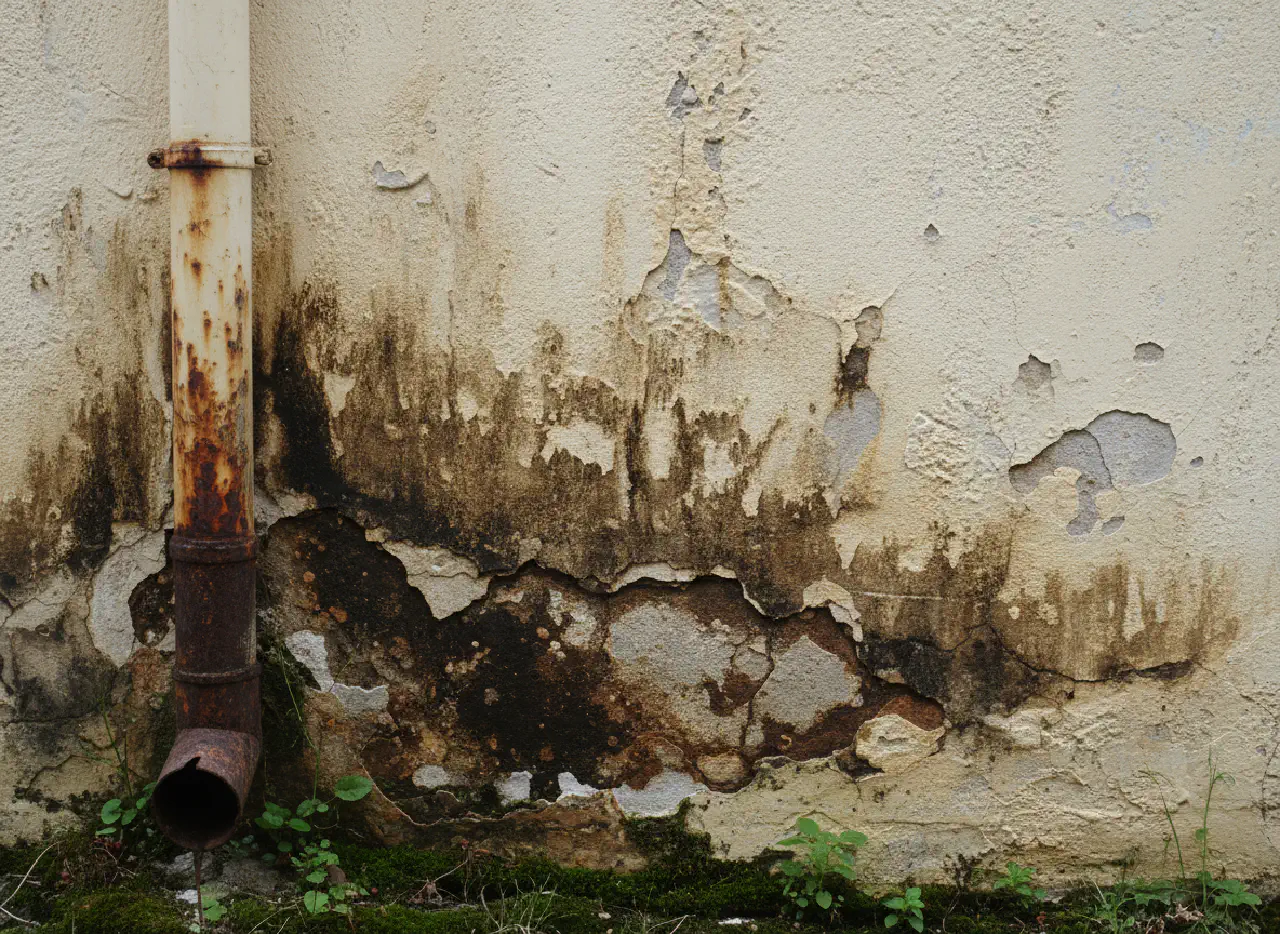
Stucco water damage is one of the most costly exterior issues facing property owners in Lee County. What often begins as minor staining or bubbling can develop into significant structural and interior damage if moisture remains trapped behind the stucco system.
Identifying leaks early, removing compromised materials, and restoring proper weather protection helps preserve the building envelope and reduce long-term repair costs—especially in Florida’s wet, storm-prone climate.
Signs of Stucco Water Damage
-
⚠
Brown or Dark Stains on Stucco
Discoloration beneath windows, near rooflines, or around penetrations—often the first visible sign of moisture intrusion.
-
⚠
Bubbling or Blistering Stucco
Raised or swollen areas where water has become trapped behind the surface.
-
⚠
Soft or Crumbling Stucco
Stucco that feels spongy or breaks apart easily when pressed, indicating prolonged moisture exposure.
-
⚠
Interior Wall Stains or Peeling Paint
Water entering through stucco can travel inward, showing up as stains or bubbling paint inside the home.
-
⚠
Efflorescence (White Powdery Residue)
Mineral deposits left behind as moisture evaporates—often seen near chronic leaks.
-
⚠
Musty Odors or Persistent Dampness
Moisture trapped in wall systems can create odors and humidity issues inside the structure.
Why Stucco Water Damage Is a Major Issue in Lee County
Lee County’s climate creates ideal conditions for stucco water damage. Frequent afternoon storms, long wet seasons, and high humidity mean that even small leaks can become serious problems if left unaddressed.
Heavy Seasonal Rainfall
From late spring through early fall, Lee County experiences frequent downpours that deliver large amounts of rain in short periods. Wind-driven rain is especially problematic, forcing water into small gaps around windows, doors, roof transitions, and wall penetrations.
High Humidity and Slow Drying
Once moisture gets behind stucco, high ambient humidity slows drying. Trapped moisture can linger inside wall assemblies, increasing the risk of substrate deterioration and interior damage.
Common Leak Locations
Water intrusion is frequently found around windows, balconies, roof-to-wall intersections, hose bibs, light fixtures, and areas where sealants have failed. Multi-story homes and townhomes are especially vulnerable due to complex detailing.
Why Early Repair Is Critical
What begins as surface staining can progress to damaged sheathing, framing issues, and interior wall repairs. Addressing water damage early helps limit the repair scope and reduces long-term costs.
Our Stucco Water Damage Repair Process
Moisture Inspection and Leak Identification
We inspect visible damage and common entry points to identify where water is getting into the stucco system. This includes checking sealants, transitions, and surrounding components.
Damage Assessment
We determine whether damage is limited to the surface or if moisture has affected underlying materials. This helps define the appropriate repair scope.
Removal of Damaged Stucco
Compromised stucco is carefully removed to expose affected areas and allow proper drying.
Drying and Substrate Repair
Wet areas are allowed to dry, and damaged substrates are repaired or replaced as needed before rebuilding the stucco surface.
Rebuilding and Stucco Restoration
New stucco is applied using appropriate materials and techniques to restore strength and weather resistance.
Texture Matching and Finish Blending
The repaired area is blended to match the existing finish so the repair looks natural.
Targeted Sealing and Protection
Sealants or coatings may be applied at vulnerable points to help reduce future water intrusion.
Common Stucco Water Damage Repair Issues We Address
Window and Door Leaks
Failed sealant or flashing allowing rainwater to enter wall systems.
Soft or Delaminated Stucco
Stucco weakened by prolonged moisture exposure.
Roof-to-Wall Intrusion
Leaks where roofing and stucco meet, especially on multi-story homes.
Balcony and Transition Leaks
Water intrusion at complex building transitions and elevated structures.
Efflorescence and Staining
Mineral deposits and discoloration caused by repeated moisture exposure.
Hidden Interior Moisture Damage
Water damage that has traveled behind stucco and affected interior walls.
Stucco Water Damage Repair Throughout Lee County
We provide stucco water damage repair throughout Lee County, including Fort Myers, Cape Coral, Bonita Springs, Estero, and Lehigh Acres.
Water intrusion is common in both older neighborhoods and newer developments, particularly in homes exposed to heavy rain, wind, and sun. We work on residential and commercial properties across inland and coastal areas of the county.
Related Stucco Services
Stucco Water Damage Repair FAQs
What causes stucco water damage in Lee County? ▼
How do I know if water damage is behind my stucco? ▼
Can water-damaged stucco be repaired or does it need replacement? ▼
How long does stucco water damage repair take? ▼
Should water damage be repaired before painting? ▼
Need Stucco Water Damage Repair?
Get a free inspection from Lee County's trusted stucco repair experts.