
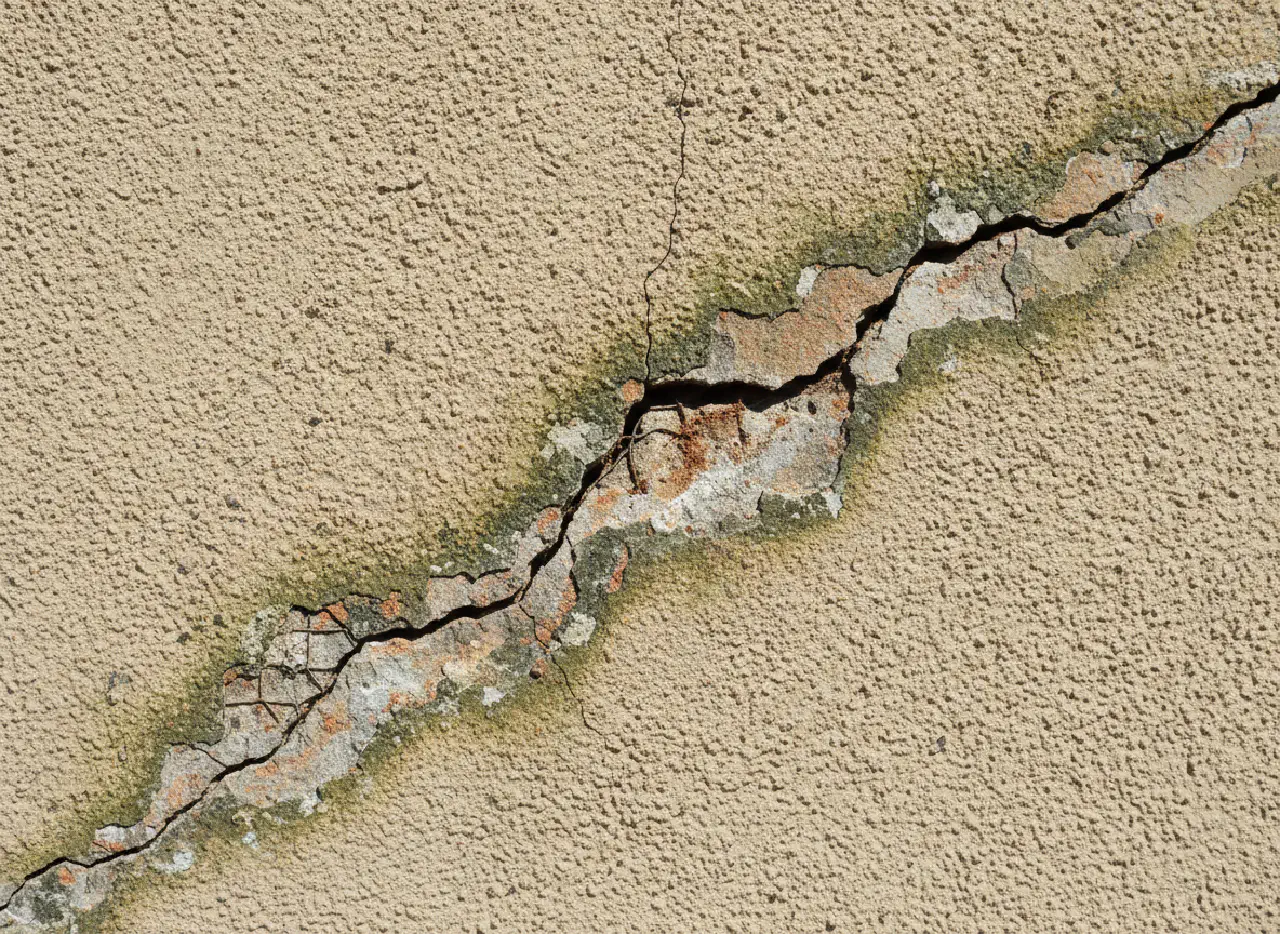
Stucco cracks are one of the most common exterior issues facing Lee County property owners. While some cracks are minor cosmetic concerns, others indicate settlement or movement—and even small cracks can become pathways for water intrusion during Florida storms.
Lee County’s combination of strong sun, long wet seasons, and tropical weather means crack repair is often time-sensitive. Sealing cracks early helps protect the wall system, reduce moisture risk, and prevent small problems from turning into expensive repairs.
Quick Answers (Lee County)
- Typical cost: $300–$500 for small crack sealing; $500–$1,200 for multiple/stress cracks; $1,500–$3,500+ for reinforced settlement repairs.
- Best time to repair: November–May (drier curing conditions), but active leaks should be repaired immediately.
- Don’t paint over cracks: Paint may hide cracks, but it usually doesn’t stop water intrusion during wind-driven rain.
What Causes Stucco Cracks in Lee County?
Stucco cracking can come from several factors—many of which are amplified by Florida’s environmental conditions.
Thermal Movement: Walls expand and contract as surfaces heat up in the afternoon and cool down overnight. Over time, repeated movement can create hairline cracks around windows, doors, corners, and other transitions.
Foundation Settlement: Some properties experience settlement as soil compacts and structures shift slightly over time. This can create diagonal cracking near window corners and door frames, and step-cracking at transitions.
Seasonal Moisture Patterns: Wet-season conditions, drainage, grading, and irrigation can influence how moisture moves around foundations. Over years, small shifts can show up as cracking along wall sections.
Storm Loading: High winds and tropical systems can stress structures. Exposed elevations and coastal/wind-prone areas often see the most impact.
Construction Issues: Missing or improper control joints, poor curing conditions during installation, or weak water-management details can lead to early cracking.
Additions and Modifications: Differential movement between old and new sections can create step-cracking where two building sections meet.
How We Repair Hairline vs Structural Stucco Cracks
Hairline cracks (often cosmetic—but still risky in Florida)
Hairline cracks are thin and usually caused by thermal movement or curing. In Lee County, even hairline cracks can leak during wind-driven rain.
Typical approach:
- Clean and prep the crack line
- Apply a flexible, exterior-grade sealant or brushable crack filler
- Blend texture to match surrounding finish
- Recommend paint or protective coating where appropriate
Structural / stress cracks (movement-related)
Stress cracks are usually wider, patterned (diagonal/horizontal), or grow over time. These may require reinforcement and sometimes additional evaluation.
Typical approach:
- Diagnose crack pattern and likely cause
- Prep and open the crack as needed to reach stable material
- Install reinforcement (mesh) when movement is likely to continue
- Seal with flexible materials designed for exterior movement
- Texture-match and blend the finish
If cracks are actively widening or returning quickly, addressing the underlying movement is key.
Why Crack Repair Can’t Wait in Lee County
In drier regions, small cracks can remain cosmetic for years. In Lee County, crack lines can become moisture entry points quickly during heavy rain.
Wind-driven storms can push water through tiny openings. Once moisture gets behind stucco, it can affect substrates and framing and eventually show up as interior staining, soft spots, or mold-friendly conditions.
The typical progression looks like this:
Small crack → moisture entry → hidden saturation behind stucco → substrate deterioration → interior damage → costly remediation.
Early crack repair—especially before peak wet season—helps prevent this chain reaction.
Common Stucco Crack Types We See
| Crack Type | Usually Caused By | Why It Matters |
|---|---|---|
| Hairline | thermal movement, curing | can leak during storms |
| Diagonal from openings | settlement/movement | may require reinforcement |
| Horizontal | differential movement | can expand and re-open |
| Step cracking | transitions/additions | indicates sections moving differently |
| Re-opening cracks | inadequate repair | usually needs better prep + flexibility |
| Cracks with staining | water intrusion | may indicate hidden moisture issues |
Professional vs DIY Crack Repair
Store-bought caulk can fail quickly in Florida because it may not stay flexible through heat cycling or withstand prolonged storm exposure. DIY repairs also commonly miss the real issue: why the crack formed and whether movement is ongoing.
Professional crack repair typically includes:
- Diagnosing crack type (hairline vs movement-related)
- Proper preparation for adhesion
- Flexible sealing methods designed for exterior exposure
- Reinforcement when needed
- Texture blending so repairs don’t stand out
Signs You Need Stucco Crack Repair
-
⚠
Visible Hairline Cracks
Thin cracks (often around windows, doors, and corners) that can let wind-driven rain into the wall system.
-
⚠
Diagonal Stress Cracks
Cracks running at angles from window corners or door frames—often a sign of settlement or movement.
-
⚠
Horizontal Cracks Along Wall Sections
Long cracks that follow wall lines and may indicate shifting or differential movement over time.
-
⚠
Water Staining Near Cracks
Discoloration, efflorescence (white deposits), or dampness around cracks—common signs moisture is getting in.
-
⚠
Cracks That Have Widened Over Time
Cracks that grow, re-open, or spread—suggesting movement or a repair method that isn’t flexible enough.
-
⚠
New Cracks After Storms
Cracking that appears after tropical systems, high winds, or prolonged rainfall—especially on exposed elevations.
Why Crack Repair Matters in Lee County
Lee County’s combination of intense sun, heavy seasonal rain, and storm exposure makes stucco cracks more than a cosmetic issue. In Florida, even small cracks can become entry points for wind-driven rain, especially during summer thunderstorms and tropical weather.
Heat Cycling and Thermal Movement
Exterior walls expand and contract as surfaces heat up in the afternoon sun and cool down overnight. South and west-facing walls often see the most stress. Over time, this movement can create hairline cracking—especially around corners, windows, doors, and other transitions where materials meet.
Soil and Settlement in Inland Areas
Some inland neighborhoods and newer builds can experience settlement as soil compacts and structures “find their position.” This often shows up as diagonal cracking near openings (window and door corners) and at transitions between sections of the home.
Water Table and Seasonal Moisture Patterns
The wet season can change how moisture moves through the ground and around foundations. Over time, small shifts can translate into cracking—especially where drainage, grading, or irrigation keeps soil unevenly saturated.
Storm-Related Stress
Hurricane-force winds and rapid weather changes can add stress to structures. Homes across Lee County have seen cracking after major storm events, particularly on exposed elevations and coastal or high-wind areas.
Why Early Repair Saves Money
If water gets behind stucco, it can affect substrates and framing, cause interior staining, and lead to expensive remediation. Sealing cracks early—especially before peak wet season—helps prevent the “small crack → hidden moisture → big repair” cycle.
Our Stucco Crack Repair Process
Comprehensive Crack Assessment
We inspect visible cracks and evaluate common leak points around windows, doors, corners, and transitions. We also check for staining, efflorescence, soft areas, and other signs of moisture behind the finish.
Root Cause Identification
We determine whether cracks are likely from thermal movement, settlement, storm stress, or prior moisture issues. This helps select the right repair method so cracks don’t just reappear.
Crack Cleaning and Preparation
We remove loose material and old failed sealant, then prep the surface for strong adhesion. Wider cracks may require removal back to stable substrate.
Reinforcement (When Needed)
For cracks that indicate movement, we may use fiberglass mesh reinforcement or methods designed to reduce re-cracking at stress points.
Crack Filling and Sealing
We apply flexible, exterior-grade crack fillers that can handle Florida heat and rain exposure. Hairline cracks may be treated with brushable sealants; wider cracks may require layered application.
Surface Blending and Texture Matching
We replicate the surrounding finish (sand, knockdown, smooth, etc.) to blend repairs naturally—especially important on street-facing elevations and HOA communities.
Protective Sealing (When Appropriate)
For high-exposure walls or areas with prior moisture issues, protective coatings or sealing may be recommended to reduce future water intrusion.
Final Inspection
We verify seals, finish blending, and readiness for paint where applicable. Guidance is provided on what to monitor and when to re-check areas over time.
Common Stucco Crack Repair Issues We Address
Hairline Thermal Cracks
Fine cracks caused by repeated expansion and contraction—often on sun-exposed walls.
Diagonal Stress Cracks
Cracks from window corners or door frames that can indicate settlement or movement.
Horizontal Cracks
Long cracks that can appear along wall sections and transitions over time.
Storm-Related Cracking
New cracks after tropical systems or major wind events, especially on exposed elevations.
Step Cracking at Transitions
A stair-step pattern where different building sections meet—common with additions or differential movement.
Cracks with Moisture Indicators
Cracks paired with staining or efflorescence that suggest water intrusion behind the stucco system.
Stucco Crack Repair Throughout Lee County
We provide stucco crack repair across Lee County, Florida, including Fort Myers, Cape Coral, Bonita Springs, Estero, Lehigh Acres, and nearby communities.
Fort Myers: Downtown, McGregor, Edison Park, Dean Park, Gateway, Iona, Colonial Blvd corridor, and surrounding neighborhoods.
Cape Coral: NW/NE/SW/SE Cape, including canal and waterfront homes near major corridors like Pine Island Rd and Del Prado Blvd.
Bonita Springs: Bonita Beach areas, Old 41/US-41 corridor, and nearby residential communities.
Estero: Communities along Corkscrew Rd, Three Oaks Pkwy, and areas near FGCU and Coconut Point.
Lehigh Acres: Neighborhoods throughout Lehigh Acres, including areas near Lee Blvd, Homestead Rd, and Joel Blvd.
We also assist commercial buildings and multi-family properties along major commercial corridors throughout the county.
Related Stucco Services
Water Damage Repair
Address moisture intrusion and staining that can develop when cracks leak during storms.
Stucco Waterproofing
Protective sealing for high-exposure elevations and areas prone to wind-driven rain.
EIFS Repair
Specialized repair methods for synthetic stucco systems where cracking and sealant failure are common.
Texture Matching
Blend repairs with surrounding finishes so patches don’t stand out.
Stucco Crack Repair FAQs
How much does stucco crack repair cost in Lee County? ▼
Can I just paint over small stucco cracks? ▼
Why do stucco cracks keep coming back? ▼
What’s the difference between hairline cracks and structural cracks? ▼
When is the best time to repair stucco cracks in Lee County? ▼
How long does stucco crack repair take? ▼
Are stucco cracks covered by homeowners insurance? ▼
Will crack repairs be visible after completion? ▼
Need Stucco Crack Repair?
Get a free inspection from Lee County's trusted stucco repair experts.