
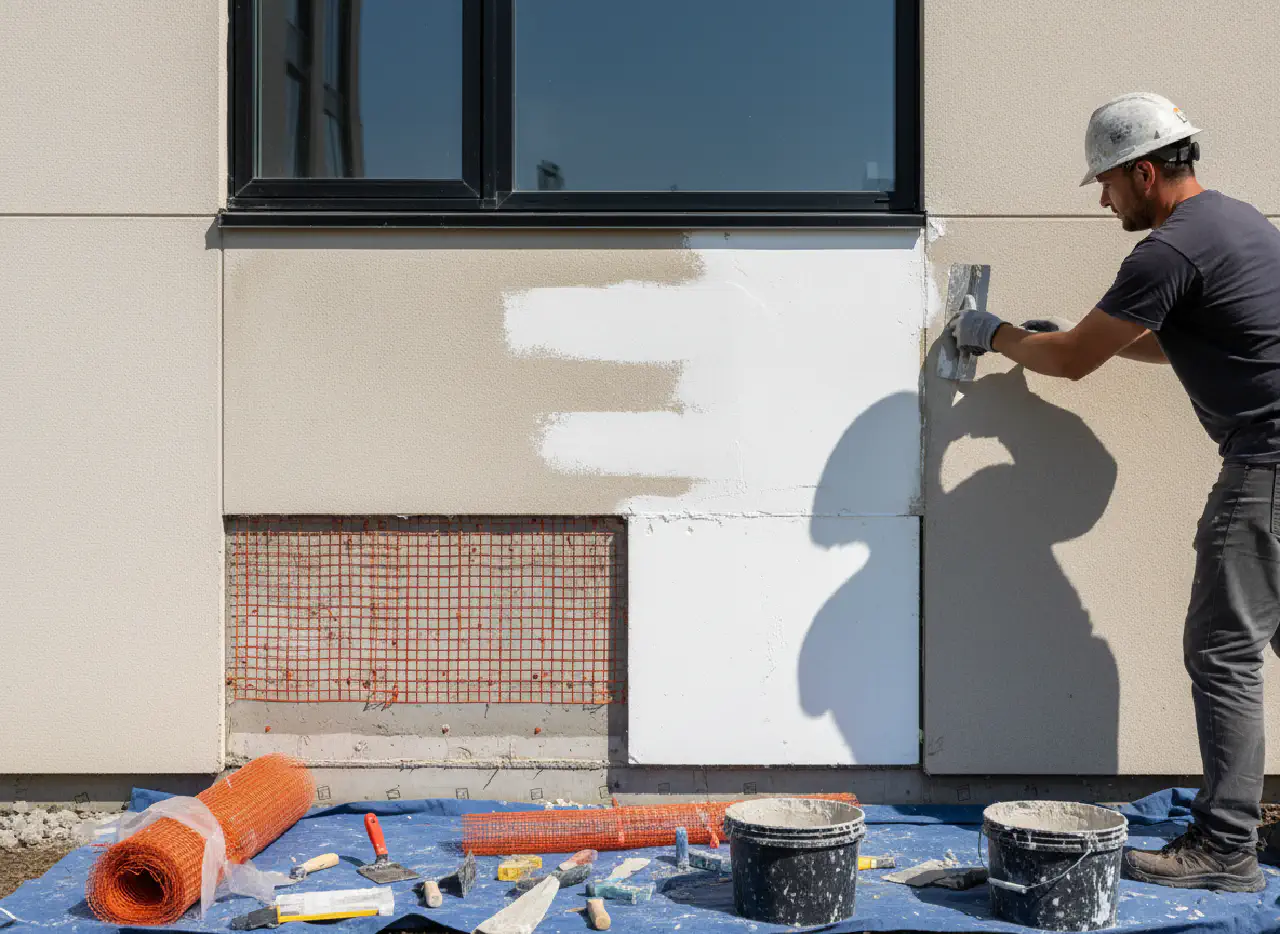
EIFS repair requires a different approach than traditional cement-based stucco. Because EIFS systems rely heavily on sealants, transitions, and layered construction, small issues can become bigger moisture problems if they’re not handled correctly.
If you’re seeing cracks at openings, soft spots, staining, or recurring issues after storms, it’s worth getting EIFS inspected and repaired before Lee County’s wet season accelerates the damage.
Signs You Need EIFS Repair
-
⚠
Cracks Around Windows and Doors
Hairline or spreading cracks at corners and openings where EIFS is most likely to separate.
-
⚠
Soft or Spongy Areas
Sections that feel slightly compressible, which can indicate trapped moisture behind the system.
-
⚠
Bubbling, Swelling, or Blistering
Surface distortion that may occur when moisture is trapped and materials break down.
-
⚠
Stains or Dark Streaks
Discoloration beneath penetrations, rooflines, or balcony edges that can signal water entry.
-
⚠
Failed Sealant Lines
Cracked, shrinking, or missing caulk at joints and transitions—one of the most common EIFS failure points.
-
⚠
Repeated Issues After Heavy Rain
Leaks or staining that appear after storms, especially with wind-driven rain in Lee County.
Why EIFS Repair Matters in Lee County
EIFS (Exterior Insulation and Finish System) is sometimes called “synthetic stucco.” Unlike traditional cement-based stucco, EIFS is a layered system that often includes foam insulation and a thin finish coat. Because of that, water management details are critical.
Lee County’s Rain + Humidity Amplify Risk
In Southwest Florida, long wet seasons and high humidity reduce drying time. If water enters behind EIFS and has no path to exit, it can remain trapped—leading to soft spots, hidden deterioration, and interior moisture issues.
Sealant Failure Is the #1 Weak Point
EIFS relies heavily on properly maintained sealant lines around windows, doors, light fixtures, hose bibs, and other penetrations. Sun exposure and heat cycling cause sealants to shrink and crack over time. Once those joints fail, wind-driven rain can enter quickly.
Coastal and Storm Exposure
Fort Myers, Cape Coral canal homes, and Bonita Springs properties experience stronger winds and more wind-driven rain during summer storms and tropical systems. Even small cracks can become water pathways when rain is pushed horizontally.
Early Repairs Prevent Bigger Tear-Outs
EIFS issues tend to spread when left unaddressed. A focused repair at a window corner today can prevent a much larger moisture remediation project later.
Our EIFS Repair Process
EIFS System Inspection
We inspect cracks, sealant lines, transitions, and areas prone to water entry (openings, rooflines, balconies, penetrations).
Moisture Risk Evaluation
We check for common indicators of trapped moisture such as soft spots, staining patterns, and recurring problem zones.
Targeted Removal (If Needed)
Where EIFS has failed, we remove compromised sections to reach stable material and confirm repair boundaries.
Substrate and Detail Corrections
We correct underlying issues that cause repeat failures—especially around openings and transitions.
EIFS Patch and Rebuild
We rebuild the system layers as appropriate and restore the finish coat to maintain appearance and durability.
Sealant and Joint Restoration
Critical joints are resealed so transitions remain watertight and flexible under heat cycling.
Blend and Final Review
We blend finish texture and confirm the repair is clean, durable, and ready for paint or final finish if needed.
Common EIFS Repair Issues We Address
Window and Door Corner Cracks
Stress cracking at openings where movement concentrates and water entry is common.
Failed Sealants and Joints
Shrunken, cracked, or missing sealant at EIFS transitions and penetrations.
Soft Spots and Localized Deterioration
Areas that feel spongy or weak, often tied to trapped moisture.
Storm-Driven Water Entry
New cracking or intrusion after heavy rain events and tropical weather.
Penetration Repairs
Old cable lines, mounts, fixtures, or unsealed holes that allow water behind EIFS.
Finish and Texture Blending
Repairs designed to blend naturally with surrounding EIFS finishes.
EIFS Repair Throughout Lee County
We provide EIFS repair throughout Lee County, including Fort Myers, Cape Coral, Bonita Springs, Estero, and Lehigh Acres.
EIFS is common on townhomes, mixed-use buildings, and HOA communities where clean curb appeal and uniform finishes matter.
Related Stucco Services
Stucco Crack Repair
Repair cracks that appear in cement stucco and around transitions.
Stucco Water Damage Repair
Address moisture-related deterioration and staining.
Stucco Waterproofing
Protect vulnerable surfaces and reduce future water entry.
Commercial Stucco Repair
Repairs for multi-unit and commercial building exteriors.
EIFS Repair FAQs
What’s the difference between EIFS and traditional stucco? ▼
Can EIFS be repaired without replacing large areas? ▼
Why do EIFS problems often show up around windows? ▼
Should EIFS be waterproofed? ▼
When is the best time to repair EIFS in Lee County? ▼
Need EIFS Repair?
Get a free inspection from Lee County's trusted stucco repair experts.